
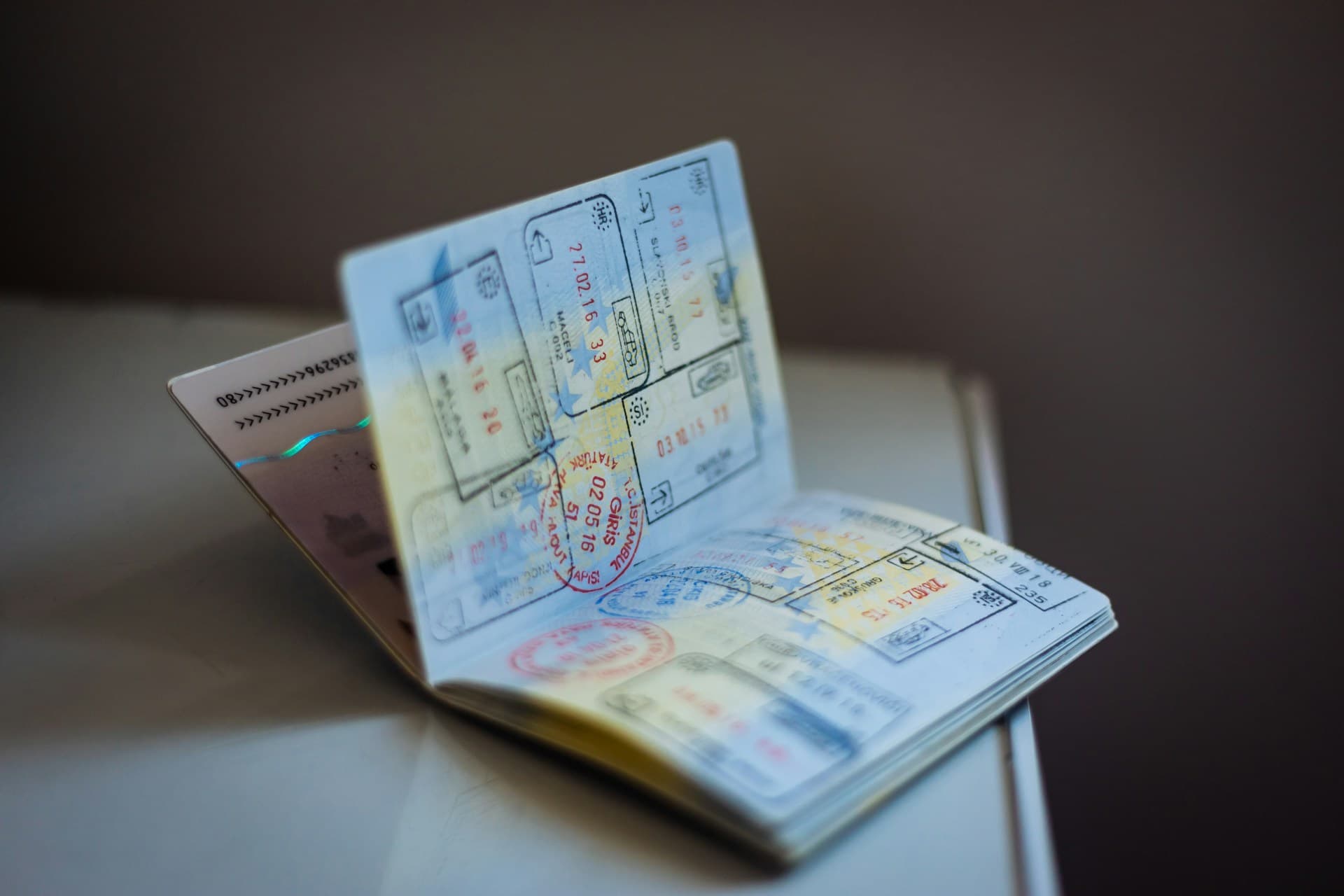
An H-1B worker with a timely-filed extension was pulled into ICE custody at an airport this week, over a rule that governs payroll, not presence. Atlanta immigration attorney Charles Kuck described the case on his July 15 broadcast after the man’s employer called him that morning.
mic What the Attorney Says
“This morning I got a phone call from an employer of a large company, big company. One of his employees was traveling on an H-1B, except for him, his H-1B had expired and his extension was pending, which of course means he’s fine cuz it’s still pending.”
According to Kuck, the agents’ theory was the 240-day rule: the extension had been pending too long, so the worker was “out of status.” That reading gets the rule backwards. Under 8 C.F.R. § 274a.12(b)(20), a worker whose employer files an extension before the I-94 expires may keep working for the same employer for up to 240 days while the petition is pending. The clock limits employment authorization. It does not convert a person with a pending, timely-filed petition into an enforcement target. USCIS’s own H-1B guidance treats that period as an authorized stay, not an overstay.
mic What the Attorney Says
“That’s not true. It just shows you how stupid some of these guys that work for ICE are. They don’t understand the law. … Now we’re going through the process to get him released from ICE custody because he shouldn’t be detained in the first place. He’s in lawful status. He’s 100% in lawful status.”
The arrest fits a pattern that has been building since March, when ICE agents were deployed to major airports during the TSA staffing crunch. Internal data obtained by Reuters shows TSA has since flagged some 31,000 travelers to ICE, and more than 800 people have been arrested off those tips. The National Immigration Law Center issued a community alert warning that having a pending application is not stopping arrests. Kuck’s description from this week is blunter.
mic What the Attorney Says
“It’s clear that ICE is now at airports. They’re at checking desks, they’re walking around the back of the airport, they’re stopping random people.”
Enforcement posture is also shifting day to day. DHS suspended ICE vehicle stops this week after fatal shootings in Maine and Texas; President Trump reversed the suspension the next morning on Truth Social. Guidance issued Tuesday can be gone by Wednesday, which is why attorneys are telling clients to plan around the agents in the terminal, not the memo of the week.
The practical rule Kuck gave viewers: carry proof of status every time you fly, even domestically.
mic What the Attorney Says
“When you’re doing travel, you have your passport, your valid visa, and your I-94 card with you. If you have DACA, you have your work permit, your approval notice, and your passport.”
Your most recent I-94 record prints free from CBP’s I-94 site. An H-4 spouse with a valid I-94 is in the same position as any other documented nonimmigrant. Kuck told one viewer ICE will not take an H-4 with papers in hand into custody, because the passport and I-94 answer the question on the spot.
The harder line is for people whose only document is an employment authorization card. An EAD proves you may work. It does not prove you have a status.
mic What the Attorney Says
“Let’s say you’re an asylum seeker and you have a work permit, do not travel. Asylum is not a status. ICE will arrest you. They arrested people this week all over the country in that situation.”
The same logic caught a DACA recipient in the Q&A whose renewal has been pending since January 8 and whose card expired May 20. He asked about a family trip to Hawaii on August 2. Kuck’s answer: “You cannot get on airplane. … Absolutely not. Don’t do it. Bad idea.” A pending renewal does not extend an expired DACA grant, which is why attorneys now say to file renewals a year out and sue at five months.
Kuck went one step further for anyone without a valid status document, invoking the border-zone authority in 8 C.F.R. § 287.1, which defines a “reasonable distance” for warrantless immigration stops as 100 air miles from any external boundary, a zone that covers most coastal cities.
mic What the Attorney Says
“If all you have is a work permit and you don’t have something to go with it like DACA or you have a valid visa, do not travel on an airplane. Do not. Don’t make it easy for ICE. Stay home and frankly stay out of a 100-mile zone around the border of the United States.”
For H-1B workers specifically, the detention story is one more argument for getting the extension adjudicated before the I-94 expires. A pending petition protects you on paper, but paper only helps if the officer reads it correctly, and this week one didn’t.
Before booking a domestic flight:
- Valid visa or status holders: carry passport, visa, and a current printout from CBP’s I-94 system. Physical copies, not photos on a locked phone.
- DACA recipients with an unexpired grant: carry the EAD, the I-821D approval notice, and a passport.
- Pending-extension travelers: add the I-797C receipt notice for the pending petition to the stack.
- Asylum applicants with only an EAD, and anyone whose card has expired while a renewal is pending: don’t fly until the approval arrives.
Sources
- Kuck Baxter Immigration — Immigration Update for July 15, 2026 open_in_new
- 8 C.F.R. § 274a.12(b)(20) — Continued employment while extension is pending open_in_new
- USCIS — FAQs for Individuals in H-1B Nonimmigrant Status open_in_new
- NILC — Community Alert: Immigration Arrests at Airports open_in_new
- CNN — ICE is at airports during the travel chaos: What agents are and aren't doing open_in_new
- LiveNOW from FOX (Reuters data) — ICE arrested over 800 people after tips from TSA open_in_new
- CBS News — Trump overturns pause of ICE vehicle stops implemented after Maine, Texas shootings open_in_new
- 8 C.F.R. § 287.1 — Definition of 'reasonable distance' (100 air miles) open_in_new