
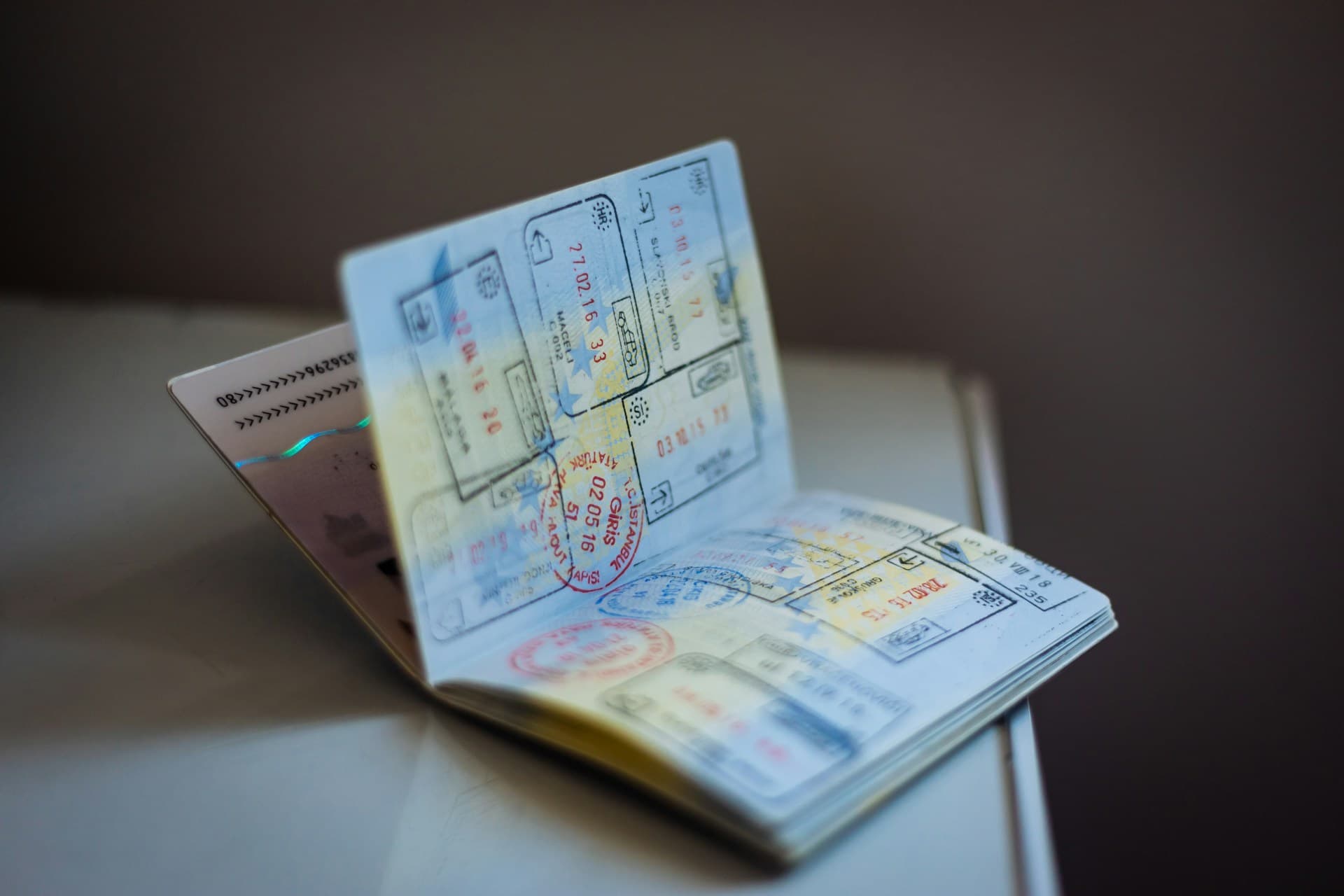
A caller to the Immigration Answer Show asked about a friend from Singapore who came to the United States on an F-1. Singapore refused to renew his passport while he was studying because he had never reported for national service, so his family bought him citizenship in Vanuatu. He updated his SEVIS record to the new nationality, applied for OPT with the new passport in February, did his biometrics in April, and has now waited more than 130 days with a job start looming. Vanuatu also happens to sit on President Trump’s travel-ban list. Founding attorney Jim Hacking said the ban is almost certainly a red herring.
mic What the Attorney Says
“So whether this has anything to do with the travel ban, I think is probably a 3% chance. I think what instead has happened is they’re like, ‘Who the hell is this person? And why do we have an F1 record of him being a Singaporean and now he says he’s from Venatu.’”
The problem is that the file makes no sense to the officer reading it. A student whose nationality changes partway through an F-1 program, then applies for a benefit under a passport that did not exist when he enrolled, is a fact pattern USCIS has no template for.
mic What the Attorney Says
“I guarantee you that in the history of USCIS, no one has ever come to the United States on an F1, gotten some citizenship through investment in a third country, and then applied for OPT. So, this was a bad bad plan.”
Getting the biometrics notice is not a signal of progress. It is automatic: an application comes in, and a couple of weeks later the system generates the appointment regardless of how strong or strange the case is. The caller read the notice as momentum; Hacking read it as noise.
What is missing is an explanation. No one has told USCIS, in a lawyer’s letter, why a Singaporean F-1 student suddenly holds a Vanuatu passport. Without that, the adjudicator is left to assume the worst.
mic What the Attorney Says
“If you didn’t lay that out for them, like with a lawyer in a letter explaining what the situation was, then they’re just saying to ourselves, ‘How in the hell did this kid get a new passport in the middle of his F1 studies? Why did his country of citizenship magically change in his F1? And who the f is this guy?’”
The investment passport never solved the underlying problem either. The student’s Singapore passport was going to lapse whether or not he bought citizenship elsewhere, because the lapse was Singapore’s leverage to force him home for military service. Buying a second nationality did not restore a valid travel document; it only added a question no adjudicator wants to answer.
There is a cleaner path ahead. The caller mentioned a serious relationship with a U.S. citizen and talk of marriage. A marriage-based green card started fresh on the new passport avoids some of the SEVIS confusion, though it will still draw scrutiny over the citizenship switch. On the pending OPT, the options are the ordinary ones for a stalled I-765: a detailed explanatory letter or, if the delay drags, the same mandamus pressure other applicants are using against EAD backlogs. Whether the travel ban ever formally enters the picture, Hacking’s estimate for a near-term OPT approval was blunt: slim.